


```html
As part of its Health funding initiative, the Josef Wund Foundation focuses on prevention and quality of life. Through a dedicated sponsorship program, the Foundation is supporting the Undine Syndrome Self-Help Group (Undine-Syndrom e.V.) with an initial grant of €5,000, to be followed by additional funding for medical research.
The non-profit Undine Syndrome Self-Help Group (Undine-Syndrom e.V.) supports affected children and adults throughout the German-speaking region. Its mission is to improve the quality of life of those living with the condition while advancing research into potential treatments and cures.
Eva Brandenbusch, Chairwoman of the association, welcomes the five-year sponsorship: “For a rare disease such as Undine syndrome, every form of support and public awareness is invaluable. We are using the funding for our current projects as well as for a joint Israeli-German research initiative.”
In Germany, approximately one in every 200,000 newborns is diagnosed with Undine syndrome each year. This extremely rare congenital disorder of the central nervous system, in which automatic breathing control is absent or impaired, causes respiratory arrest during sleep. Thanks to diaphragm pacemakers and lifelong ventilatory support, those affected are able to lead relatively normal lives.
Christoph Palm, former Mayor and CEO of the Josef Wund Foundation, first became aware of the disease through the name "Undine," which is also the title of the Foundation's award dedicated to the theme "Water for Humanity." “We want to contribute to improving the quality of life of those affected and their families while supporting further research into Undine syndrome. Every person living with this condition deserves the opportunity to build a positive future.”
Congenital Central Hypoventilation Syndrome (CCHS), also known as Undine syndrome, is a rare congenital disorder of the central nervous system in which automatic breathing control is absent or impaired. During sleep—or when additional illnesses occur—the body's natural respiratory response is reduced to varying degrees. As a result, affected children require assisted ventilation during sleep, and in some cases even while awake. Many children are fitted with diaphragm pacemakers, allowing them to remain mobile. Individuals with Undine syndrome depend on artificial ventilation throughout their lives, at least during the night. Thanks to modern home ventilation and monitoring technologies, people living with the condition can now enjoy fulfilling and productive lives. Early diagnosis, together with comprehensive care and training for parents and caregivers, is essential. Since both the diagnosis and available treatment options have only become established in recent decades, the oldest known patients are currently in their late thirties. Many are active in professional life and are able to start families of their own.
The non-profit Undine Syndrome Self-Help Group (Undine-Syndrom e.V.) was founded on October 18, 2008, during the first German-speaking Undine Congress in Munich. Today, the association represents around 90 families with affected members aged between 0 and 35 from Germany, Switzerland, and Austria. In addition to raising awareness of the condition, the organization's goals include providing guidance on ventilation options, connecting affected families, and offering practical day-to-day support.
In keeping with the vision of its founder, the Josef Wund Foundation aims to inspire society, encourage positive change, provide support, and help people who strive to make the best of their lives for themselves and others. This philosophy forms the basis of the Foundation's commitment to supporting individuals who, through no fault of their own, face difficult circumstances at the beginning of their education or professional careers. The Foundation's assistance is intended to benefit each individual while also creating lasting value for society as a whole.
Further information
Josef Wund Foundation – jw-stiftung.de
Undine Syndrome Self-Help Group (Undine-Syndrom e.V.) – undine-syndrom.de
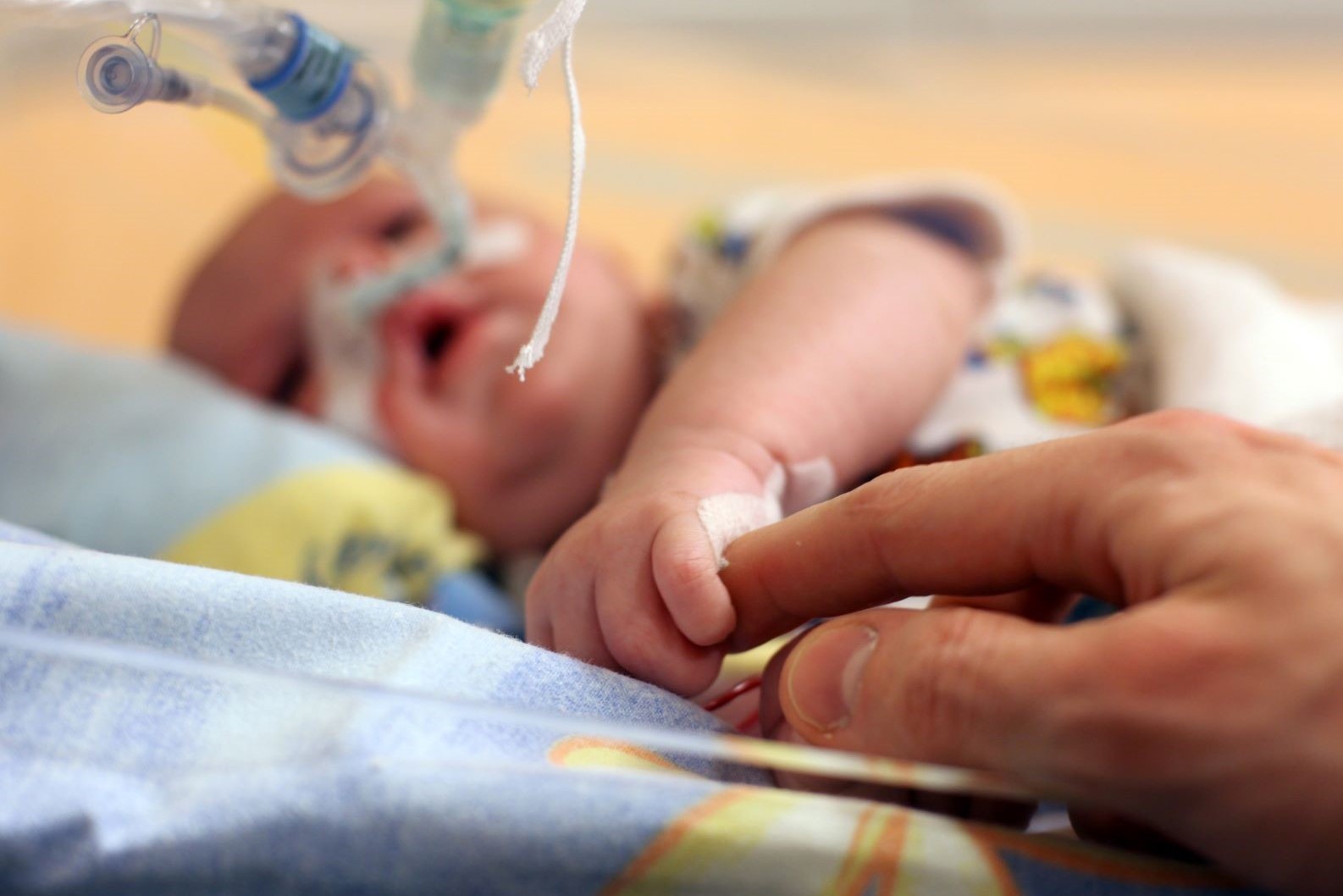
Photo: Infant receiving ventilatory support, copyright: Undine Syndrome Self-Help Group (Undine-Syndrom e.V.)
```